
Protective clothing is essential in many industries to safeguard workers from hazardous environments. Whether it’s medical, industrial, or chemical work, the ability of protective clothing to resist punctures can make a significant difference in safety. Puncture resistance for protective clothing is a critical performance attribute, particularly when it comes to preventing needle punctures, sharp objects, or abrasive substances from penetrating the fabric. This article explores the significance of testování odolnosti proti propíchnutí and how it can be accurately measured according to standards such as ASTM F2878.
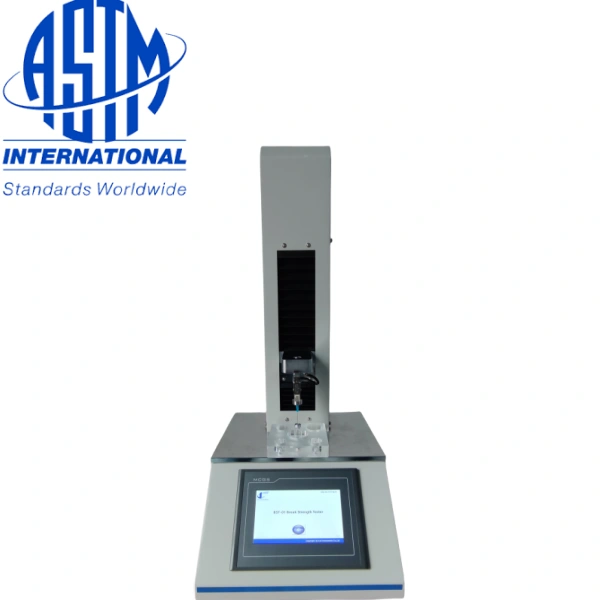
ASTM F2878 Standard Test for Hypodermic Needle Puncture Resistance
ASTM F2878 is the primary standard used to determine the odolnost proti propíchnutí of protective clothing materials, especially against hypodermic needles. This test evaluates how well different types of fabrics, including textiles, elastomers, and coated materials, resist puncture by a hypodermic needle under controlled conditions.
The test setup involves placing the fabric sample in a support assembly, where it is punctured by a hypodermic needle at a consistent speed until the needle penetrates through the material. The load cell connected to the material testing machine measures the maximum force required to puncture the fabric. The odolnost proti propíchnutí is then calculated by averaging the force measured during multiple tests.
Significance of Puncture Resistance Testing for Protective Clothing
Puncture resistance is a crucial factor in determining the protective qualities of garments used in hazardous environments. For materials like gloves, aprons, and full-body suits, the resistance to hypodermic needle puncture is especially important in industries such as healthcare, pharmaceuticals, and chemical processing.
Protective clothing that fails to meet puncture resistance standards can lead to accidents, injuries, and exposure to harmful substances. ASTM F2878 ensures that materials used in protective clothing can withstand puncture by sharp objects, providing essential protection to workers.
Hypodermic Needle Puncture Testing: An In-Depth Look
Hypodermic needle puncture testing involves using needles of specific sizes, including 21G, 25G, and 28G, to simulate real-world puncture scenarios. These needles are typically made from stainless steel and are known for their sharpness and precision. During testing, the needles penetrate the material at a 90-degree angle, simulating the type of puncture that might occur in a medical or industrial environment.
For effective testing, the specimen holder ensures that the material is tightly held in place to prevent slipping during the test. Once the needle penetrates the material, the force required to achieve full penetration is recorded. This force provides an accurate measure of the material’s resistance to puncture.
Using the NPT-01 Needle Puncture Tester for Accurate Results
To achieve precise measurements of odolnost ochranných oděvů proti propíchnutí, Cell Instruments’ NPT-01 Needle Puncture Tester offers a reliable and efficient solution. This advanced testing machine is designed to simulate the penetration of a hypodermic needle into protective fabrics, providing accurate data for material performance.
The NPT-01 Needle Puncture Tester ensures that puncture resistance is measured under controlled conditions, with adjustable settings for needle type, penetration speed, and test pressure. It allows manufacturers and quality control teams to validate the puncture resistance of different materials and ensure they meet safety standards before they are used in protective clothing.
Puncture Resistance Test Procedure
Na stránkách puncture resistance testing procedure follows these basic steps:
- Sample Preparation: The fabric sample is carefully cut and mounted in the support assembly.
- Needle Selection: Needles of specific gauges (such as 21G, 25G, or 28G) are selected for the test.
- Testing Setup: The needle is positioned perpendicularly to the fabric, and the test machine is set to the desired speed and pressure.
- Puncture Test: The needle is moved towards the fabric at a constant speed. The force required to penetrate the material is recorded.
- Data Analysis: The average force from multiple tests is calculated to determine the material’s puncture resistance.
Applications and Importance of Puncture Resistance in Protective Clothing
Protective clothing used in medical, industrial, and military environments must meet stringent standards for puncture resistance. Materials such as latex gloves, chemical suitsa medical gowns must be tested for their ability to withstand punctures from sharp objects, including hypodermic needles and other hazardous materials.
By testing the odolnost proti propíchnutí of materials according to ASTM F2878, manufacturers can ensure that their products provide the necessary protection for workers in hazardous environments. This testing also plays a crucial role in zajištění kvality a product development, ensuring that only the most reliable and durable materials are used in the creation of protective clothing.
Závěr
Puncture resistance for protective clothing is a vital factor in ensuring the safety and well-being of workers exposed to potential hazards. By using standards such as ASTM F2878, manufacturers can assess the durability and resistance of materials against hypodermic needle punctures and other sharp objects. The NPT-01 Needle Puncture Tester z Cell Instruments provides an accurate and efficient method for conducting these tests, ensuring that protective clothing meets the required safety standards.
For industries where safety is paramount, investing in reliable testing equipment like the NPT-01 Needle Puncture Tester guarantees that protective clothing performs optimally, safeguarding workers from potential injuries and contamination.
 CS
CS  EN
EN  AR
AR  BG
BG  DA
DA  DE
DE  EL
EL  ES
ES  ET
ET  FI
FI  FR
FR  HU
HU  ID
ID  IT
IT  JA
JA  KO
KO  LT
LT  LV
LV  NB
NB  NL
NL  PL
PL  PT
PT  RO
RO  RU
RU  SK
SK  SL
SL  SV
SV  TR
TR  UK
UK