
ISO 11040-4
Needle Penetration Test
Ensuring the performance and safety of prefilled syringes is vital in medical and pharmaceutical applications. ISO 11040-4 outlines the essential specifications for glass barrels for injectables and sterilized subassembled syringes ready for filling. One of the critical quality assessments under this standard is the iğne penetrasyon test yöntemi, which evaluates how easily a syringe needle penetrates a standard material.
What Is ISO 11040-4 and Why It Matters
ISO 11040-4 is a globally recognized standard in the ISO 11040 series that specifically addresses glass barrels for injectables ve pre-assembled sterilized syringes intended for aseptic filling. It ensures that these components meet strict dimensional and functional criteria to maintain product sterility, compatibility, and patient safety.
A significant part of this standard is the needle penetration test, which verifies the mechanical performance of the needle during usage. The ease with which a needle can pierce a substrate reflects on its sharpness, material quality, surface treatment, and manufacturing consistency.
This testing is critical for:
- Ensuring smooth injections with minimal patient discomfort
- Preventing needle breakage or bending
- Guaranteeing compatibility with packaging materials
- Confirming compliance for regulatory submission
Needle Penetration Test Method Explained
Bu iğne penetrasyon test yöntemi, as detailed in Annex F of ISO 11040-4, assesses the force required for a syringe needle to pierce a defined test foil. This procedure is derived from DIN 13097-4 and is referenced in ISO 7864, another important standard covering sterile hypodermic needles.
Key components of the method include:
- Test apparatus: A universal tensile and compression tester with a force range up to 10 N and a speed of 20–200 mm/min.
- Sampling rate: 500 Hz is recommended for accurate peak force detection.
- Needle holder: Ensures vertical alignment for precise penetration.
- Test foil: Material and thickness are to be agreed upon by the manufacturer and client.
- Needle samples: Can be siliconized or untreated, depending on intended use.
- Data collection: A force vs. displacement curve is generated for each test, measuring peak force ve sürükleme kuvveti.
The method guarantees that the needle sharpness and coating uniformity are within acceptable parameters, ensuring reliable syringe performance.
Şırınga İğnesi Testi En İyi Uygulamaları
Bir araştırma yürütürken şırınga iğnesi testitutarlılık ve doğruluk için süreci optimize ederken ISO yönergelerini takip etmek çok önemlidir:
- Onaylanmış substratlar kullanın: Mesela lateks kauçuk, poli̇üretanveya poli̇eti̇len Cilt veya ambalaj koşullarını taklit eden.
- Çevresel değişkenleri kontrol edin: Tutarlılığı sürdürmek sıcaklık ve nem test sırasında.
- Numunenin yeniden kullanımını önleyin: Her testte folyo veya alt tabakanın yeni bir bölümü kullanılmalıdır.
- Kalibrasyonu sağlayın: Test cihazı düzenli olarak izlenebilir standartlarla kalibre edilmelidir.
- İyice belgeleyin: Test raporuna folyo özelliklerini, test hızını, numune sayısını ve tüm kuvvet eğrilerini dahil edin.
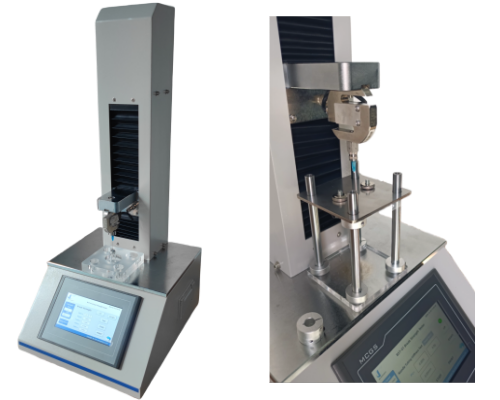
ISO 11040-4 uyarınca iğne penetrasyon testleri gerçekleştirmesi gereken laboratuvarlar ve üreticiler için, Cell Instruments' NPT-01 İğne Penetrasyon Test Cihazı güvenilir, yüksek performanslı bir çözümdür.
Temel özellikleri NPT-01 dahil:
- 0,5% hassasiyete sahip yüksek hassasiyetli kuvvet sensörleri
- Ayarlanabilir test hızları 20 mm/dak ila 200 mm/dak
- Gerçek zamanlı kuvvet-yer değiştirme eğrileri dışa aktarılabilir verilerle
- Özelleştirilebilir iğne tutucular ve folyo kelepçeler
- Çeşitli şırınga boyutları ve iğne göstergeleri ile uyumludur
Kullanarak NPT-01 ISO 11040-4 ve ISO 7864 ile uyumluluğu kolaylaştırırken değişkenliği azaltır ve veri bütünlüğünü geliştirir. Özellikle aşağıdakiler için çok uygundur Ar-Ge laboratuvarları, kalite kontrol departmanlarıve düzenleyi̇ci̇ doğrulama süreçleri̇.
 TR
TR  EN
EN  AR
AR  BG
BG  CS
CS  DA
DA  DE
DE  EL
EL  ES
ES  ET
ET  FI
FI  FR
FR  HU
HU  ID
ID  IT
IT  JA
JA  KO
KO  LT
LT  LV
LV  NB
NB  NL
NL  PL
PL  PT
PT  RO
RO  RU
RU  SK
SK  SL
SL  SV
SV  UK
UK